Winter in Glacier National Park can be a wonderful time to visit, especially if you love snow. We’re locals to this area with over 50 years combined experience visiting Glacier, and you’ll find all our best tips below to have a wonderful winter vacation.
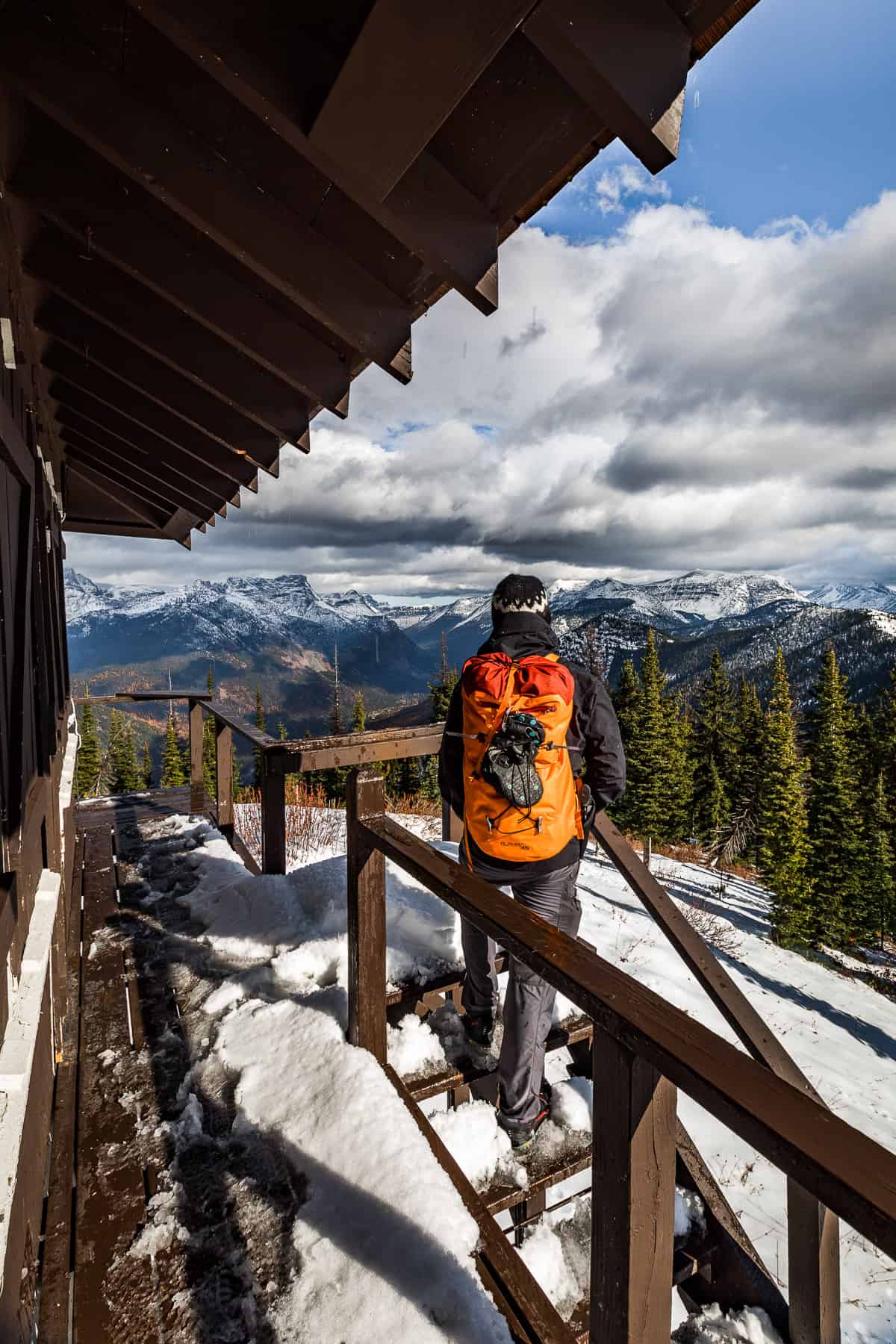
Scalplock Lookout in October
Let’s just get straight to the point, shall we? Is Glacier National Park really worth a visit in the winter? I would say yes myself, but be sure to read the pros and cons below. The winter months in Glacier are quiet and incredibly beautiful.
However, the winter months are also limited compared to the summer. After all, there’s a reason everyone visits during July and August. And that’s because everything is open during those 2 months! But no worries, there’s plenty to do and see if you don’t mind the cold weather.
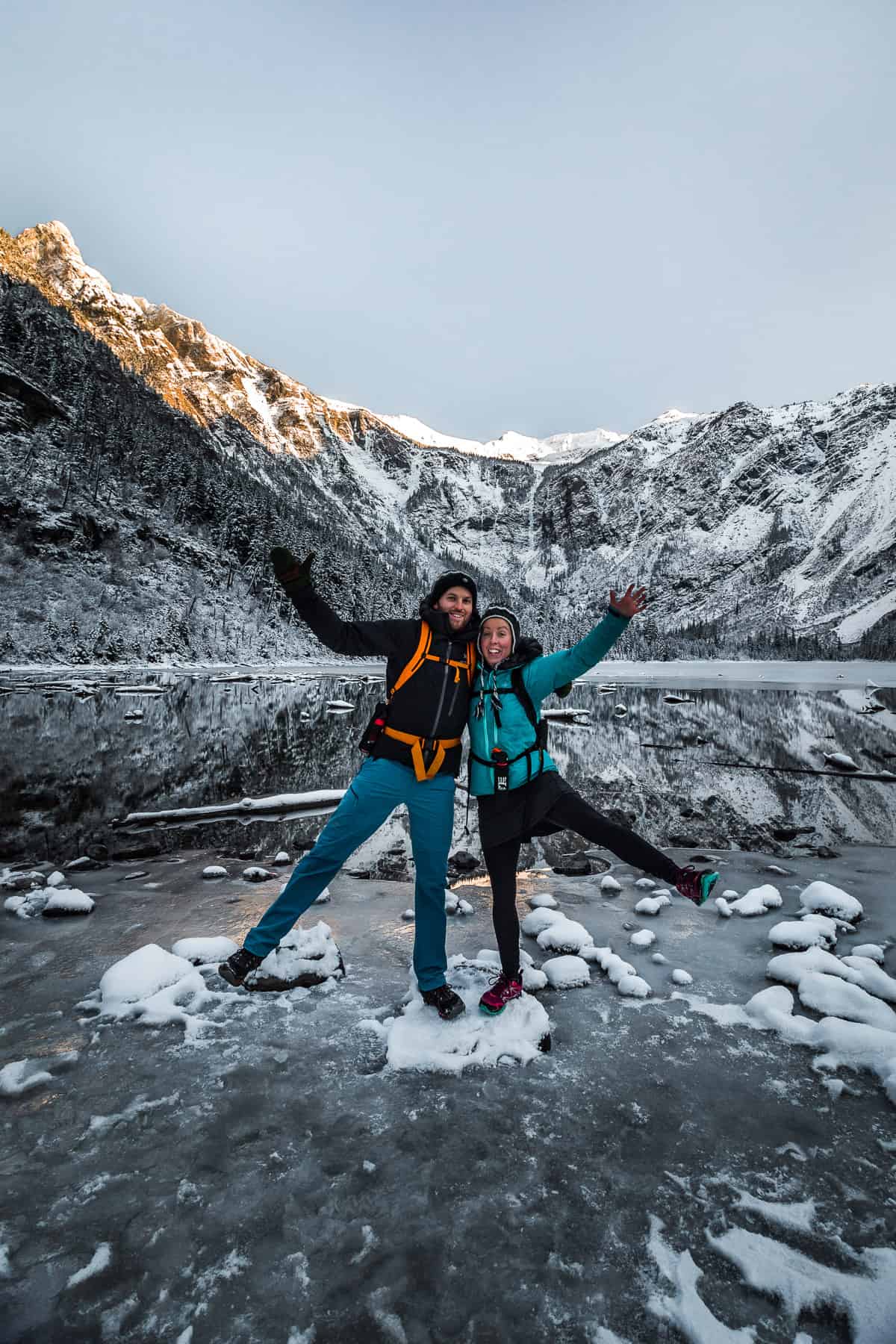
Hi, we’re Tyler and Kari, locals who love Glacier National Park, and spend a lot of time here in the winter! Pictured here is Avalanche Lake near Thanksgiving time.
What winter ‘means’ in Glacier National Park
There’s a joke in Montana that winter lasts for 8 months, and this is pretty much true for Glacier. For the purposes of this post, winter begins in October and runs into the beginning of July (see photo below)! Going to the Sun Road is only open 2-3 months per year. But there are other areas to see when the main road is closed to Logan’s Pass.
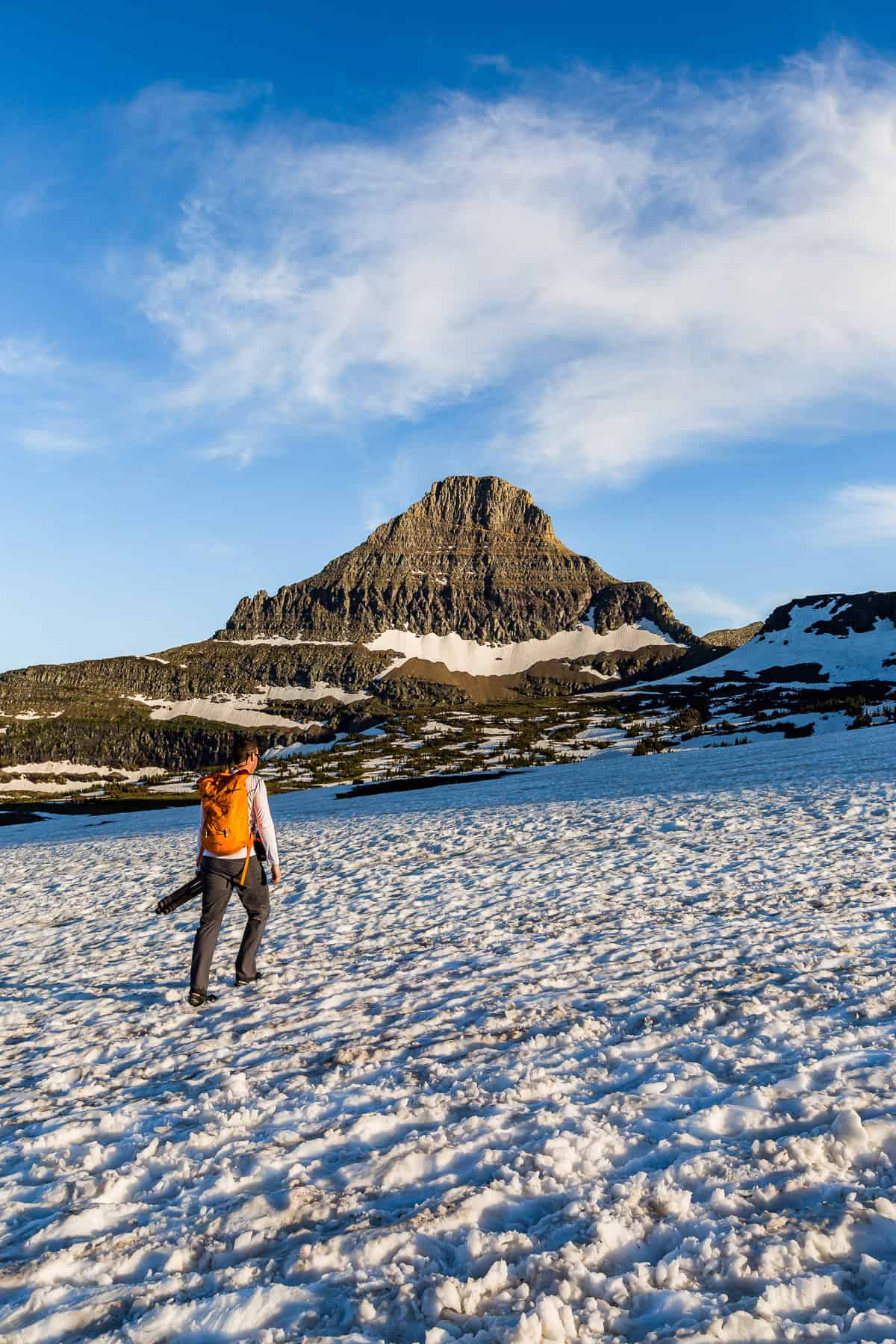
Hiking to Hidden Lake on July 4th – so much snow!
The above photo was taken on the 4th of July hiking into the popular Hidden Lake from Logan’s Pass. This should give you an idea of what early ‘summer’ looks like in the high country. There’s still quite a bit of snow, and you’re going to need appropriate shoes and clothing right through into summer.
Going to the Sun Road often opens at the beginning of July, and the conditions can be wintery. However, there’s plenty of hiking for spring or early summer at lower elevations.
Since ‘winter’ in Glacier is most of the year, what is there to do
- Go for a hike in the lower elevations. We often hike into Avalanche Lake and Apgar Lookout right up until Thanksgiving time.
- Snow-shoe up Going to the Sun Road where it’s gated for the season, or on the other side of the lake at Fish Creek. It’s also popular to snowshoe up part of (or all of the mountain if you’re hardcore) Mount Brown or the Sperry Chalet trail. These both share a trailhead and begin from the parking lot where the road is gated for the season at Lake McDonald Lodge.
- See the iconic Lake McDonald Lodge and wander down to the lake for a photo.
- Cross-country ski up Going to the Sun Road where it’s gated at the lodge. There’s usually a broken-in ski trail leading right up the road. You can connect up with the John’s Lake Loop Trail , which will take you along McDonald Creek, which is spectacular.
- Go on the groomed cross-country skiing trails at the Izaak Walton Inn located between the entrances of East and West Glacier. You can usually rent cross-country skis or snowshoes in Whitefish at Sportsman Ski Haus.
- Enjoy the classic view of Lake McDonald from the dock near Apgar Village. You can also ski up Fish Creek which is the opposite side of the lake.
- Take a ranger-guided snow-shoeing tour from the Apgar Visitor Center when available.
- Backcountry camping – or winter camping is not super likely but it is an option. You still need a permit to camp in Glacier in the winter.
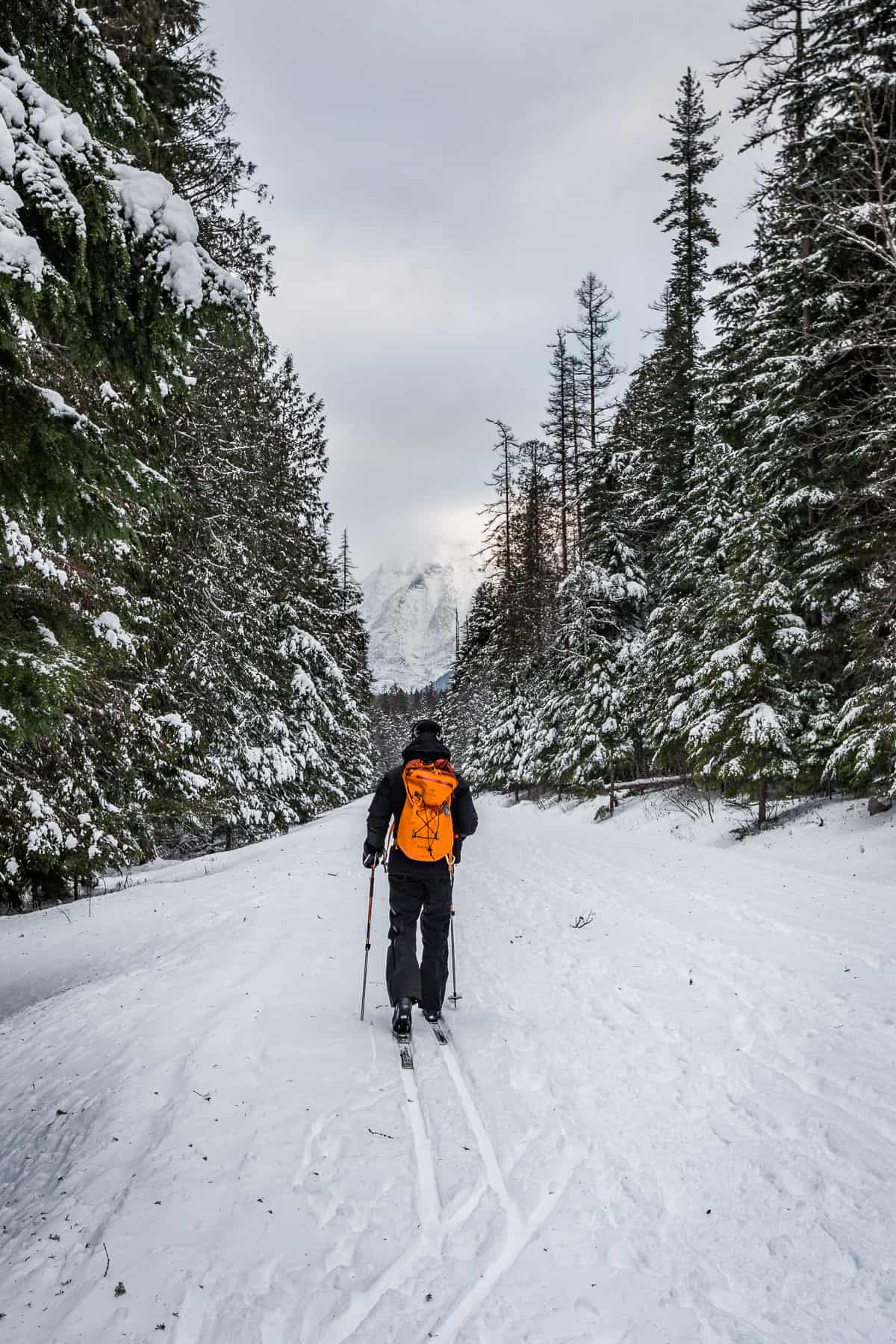
Skiing Going to the Sun Road in late December.
Safety First
- Winter conditions can be dangerous for a number of reasons! It’s best to be experienced and prepared. If you don’t own the proper gear, plan on visiting the lake for photos rather than venturing into the wilderness.
- Check weather and avalanche forecasts. You can’t plan on following your tracks back out if it snows and you don’t want to be lost.
- Also, avalanche danger increases as the winter moves on, so backcountry things like snowshoeing / backcountry skiing become increasingly dangerous. We’ve never been up to the higher elevations past November. But it’s weather and experience permitting. We do know people who ski into the backcountry, but it’s very risky, and you know your experience level best!
- Know your limits! This wilderness is always life-threatening when you aren’t prepared, but even more so in the winter.
- You may find suggested things to do online, like ‘ski into Grinnell Glacier,’ but this is a far-fetched idea, to say the least. Unless you have extensive experience and stamina along with the gear to stay alive in the backcountry for at least 2 days over 16+ miles of snowy terrain – this isn’t a realistic option. Pick options that sound like fun, but stay safe!
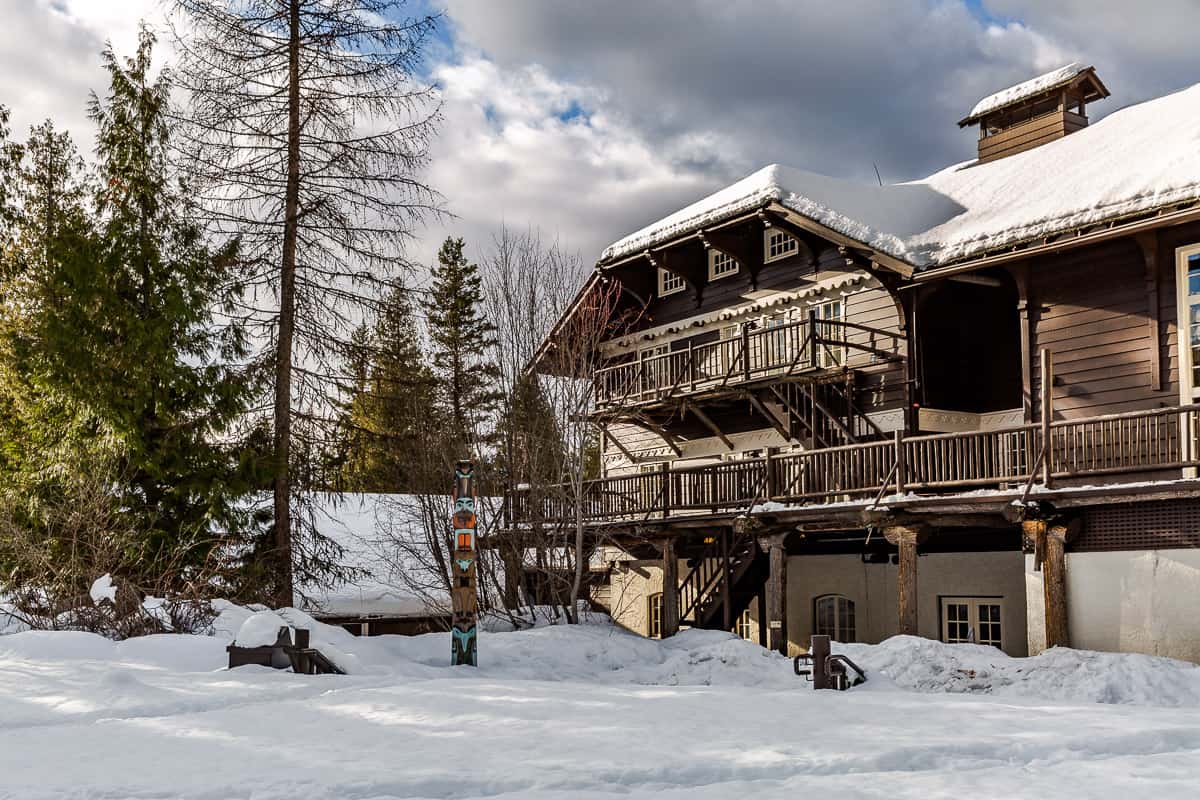
The iconic Lake McDonald Lodge
Pros and Cons of Glacier National Park in the winter
- Pro – much quieter and less crowded.
- Con – not much is open. Most of the trails, roads, shops, etc. are all closed.
- Pro – beautiful winter scenery.
- Con – can certainly be very cold. Temperatures range from -20ºF to 40ºF on average throughout our winters. Wind chills can cause it to be -50ºF with frostbite occurring in less than 10 minutes.
- Pro – the weather! If you love snow, the winter truly is magical. Although it might mean you can’t get out as much, see below.
- Con – the weather! It’s a plus and a minus in the winter. Sometimes, it’s absolute magic and other times; it’s not advisable to leave your house for more than a few minutes. This can be a real downside if you’re on vacation and can barely leave your rental car because it’s -20ºF! If you’re used to this type of weather, you’ll be fine. But we see many people come in during the winter who don’t even have a coat. If that’s the case, it’s not safe to be out when it’s super cold!
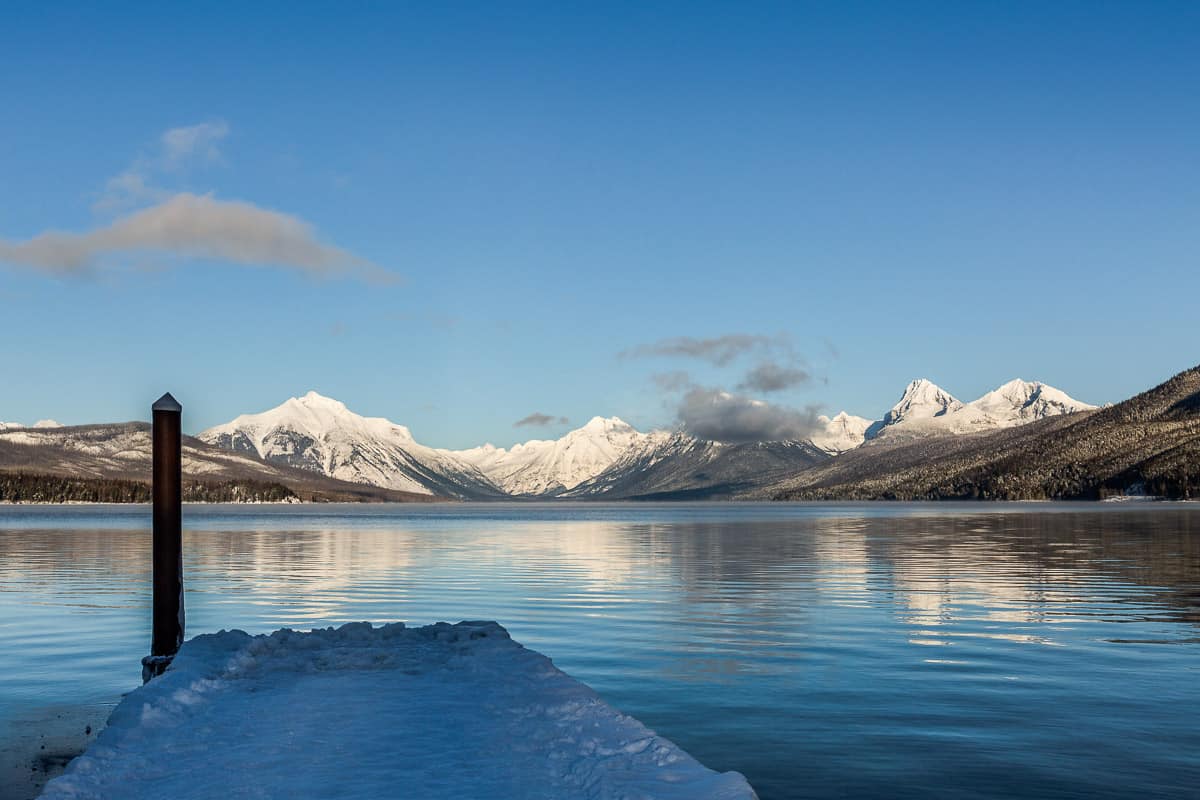
The classic view from the dock overlooking Lake McDonald from the Apgar Village Side.
Yes, but only partially. Going to the Sun Road is only open July through September. The roads into Many Glacier and Two Medicine also close in late fall. But there are still plenty of things to see around Lake McDonald on the west side.
Walk, snowshoe, or cross-country ski up Going to the Sun Road where it’s gated. If you get far enough you will see the Sacred Dancing Cascade waterfall on Lake McDonald Creek.
Yes, but it’s very unlikely! I live here and have only seen them a few times ever in my whole life. They’re rare to see, but you might get lucky during your visit.
I would say yes, but I love the winter! With some planning and good quality clothes, you can really enjoy your time here in the winter months. But if you’re not a fan of the cold, I recommend coming in July or August.
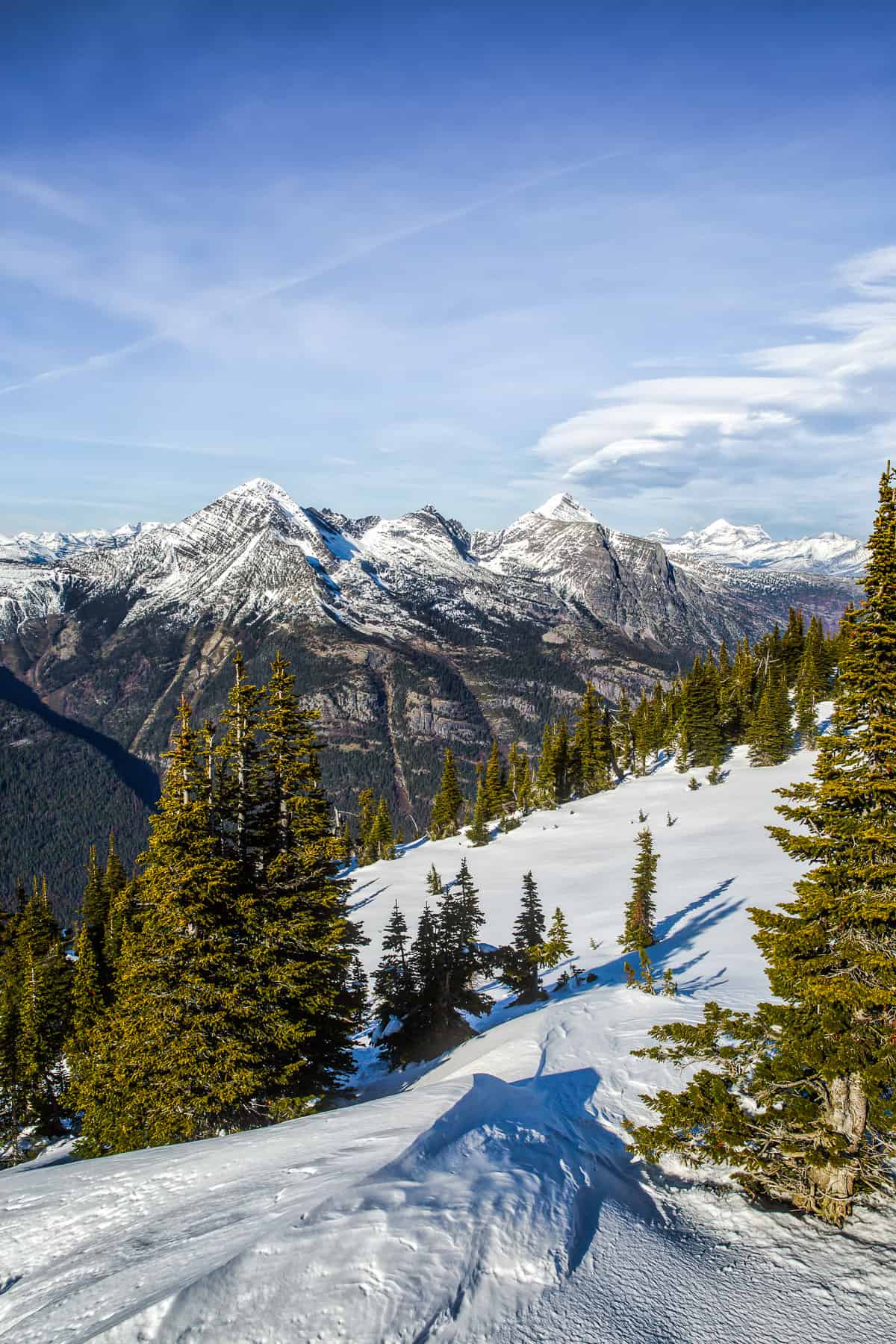
View from the top of Mount Brown in late October. You can see the snow is already several feet deep!
Best off season hikes in Glacier National Park
- Avalanche Lake and Avalanche Gorge – they share the same trail head and are generally open until the end of November. You can usually hike in here starting in April as well.
- Apgar Lookout – is the perfect off season hike for October/November and April/May as well.
- Scalplock Lookout – again Oct/Nov and April/May depending on snowpack.
- Scenic Point – until mid-Oct, sometime into early November.
- Mount Brown – if you’re in stellar shape you can usually get to the top through October.
- Huckleberry Lookout – usually hike-able through October.
- Going to the Sun Road where it’s gated and Fish Creek are the best all around option during the peak winter months when everything else is under a lot of snow.
Most of what’s listed above is found at the west entrance to the park. Scalplock Lookout is near Essex, and Scenic Point is on the east side in Two Medicine. Be sure to check with the national park service website for current conditions.
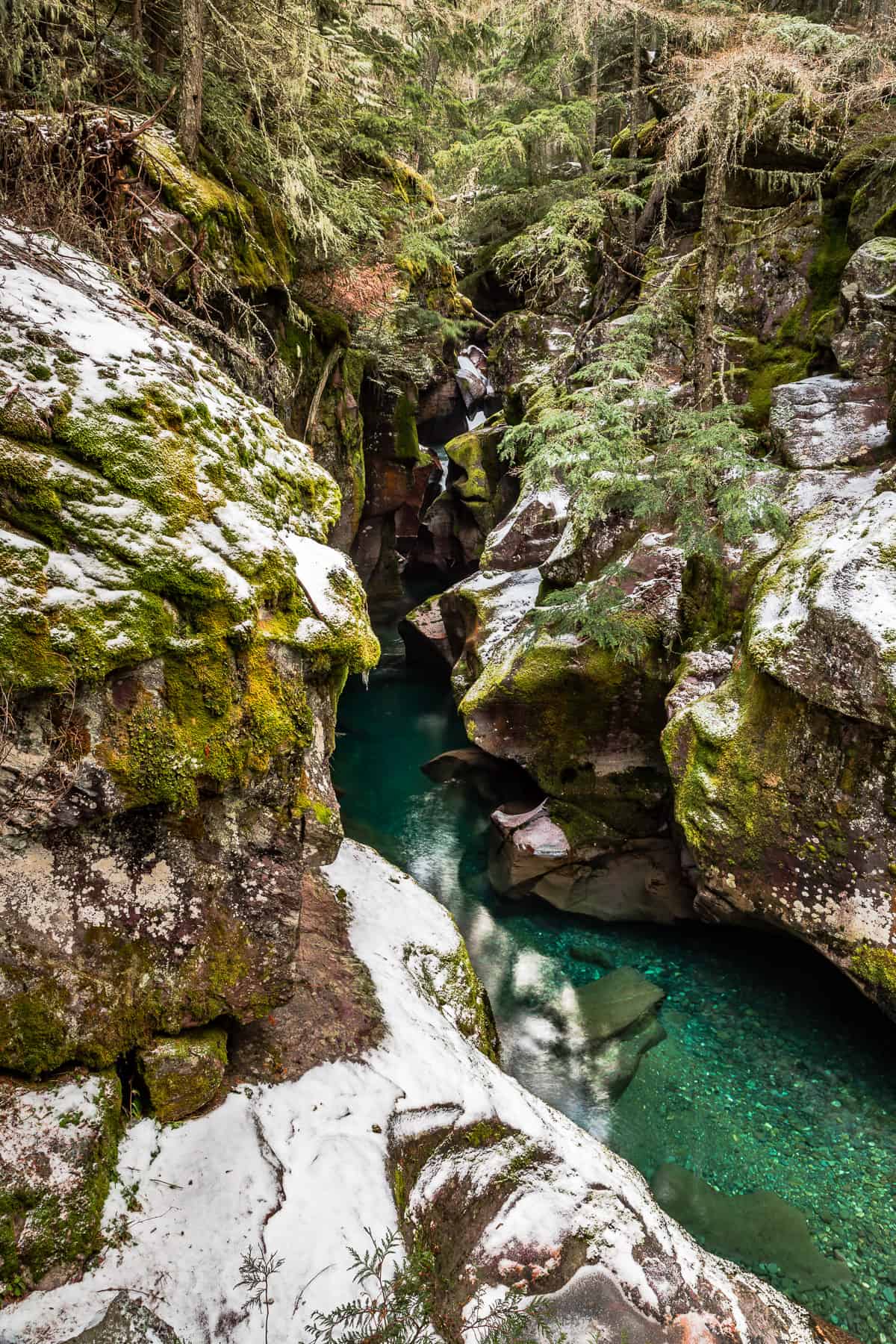
Avalanche Gorge from the Trail of the Cedars/Avalanche Lake Trail in late November.
What you need to know about Glacier in the winter
- Bathrooms – there are flush toilets at the Apgar Visitor Center. There’s a pit toilet at the Apgar picnic area near the lake. Then, there is a pit toilet located at the end of the lake in the parking lot outside the Lake McDonald Lodge, right where the road is gated.
- Road closures – be sure to check the current conditions on the park service website. Sometimes, the road around the lake closes briefly after large winter storms.
- Campgrounds – usually shut down and go ‘primitive’ by October. And by November the only place to camp without a permit is the Apgar picnic area which has a pit toilet.
- Safety – As mentioned above, be sure to check the weather forecasts and be aware of the avalanche danger as well. If you don’t live in a cold climate, do your best to understand the realities of cold weather. When our temperatures drop and the wind picks up, frostbite can occur in just minutes. Also it can be easy to get dehydrated when you spend time outside in the cold. There’s so much to say here, but just be safe!
- Wildlife – bears do hibernate but can be around early winter and late winter as well as an occasional pop-out here and there. Besides bears, there are also all sorts of wildcats including mountain lions etc. here so be aware and come prepared. Mostly you’ll just see the occasional deer. And even with all our time outdoors, we’ve not seen a predator in the winter yet. Although we have seen their tracks!
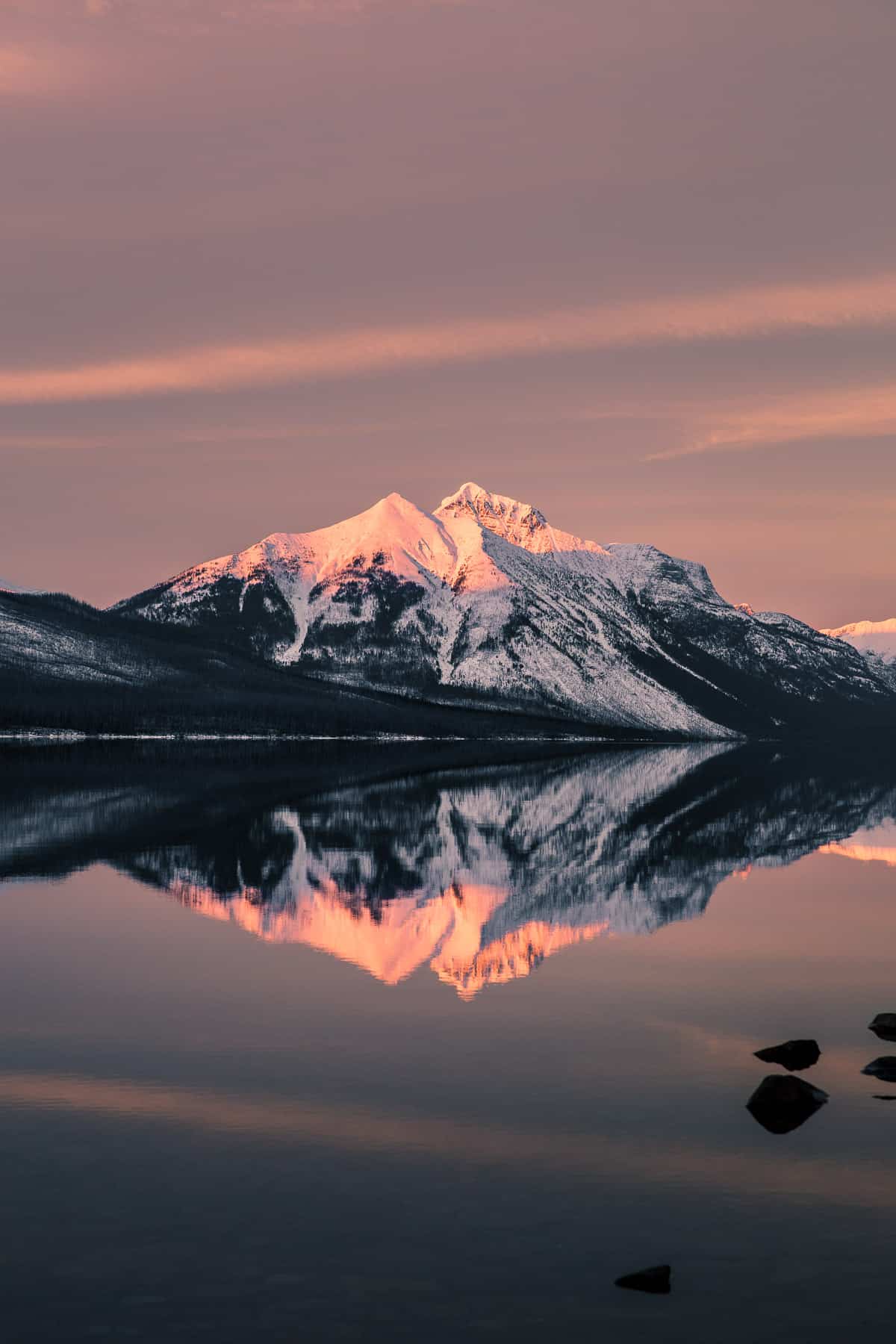
I hope you find this helpful if you’re planning a winter vacation to Glacier National Park! Definitely let me know if you have any questions below. And there’s plenty to do outside of the park as well like downhill skiing at Blacktail or Whitefish Mountain Resort.
You can also rent snowmobiles at Whitefish Mountain for extra fun. And there are lots of shopping adventures and yummy eats in Whitefish and nearby Kalispell.
